
Why Alignment Matters: Domestic Check-Off and the Import Levy
When Canadian beef producers sell cattle, they contribute to the national beef check-off. That investment supports work that benefits the broader Canadian beef industry, including market development, consumer demand, public and stakeholder engagement, and research.
When beef or beef cattle are imported into Canada, an import levy is also collected. While the structure is not identical in every detail, the principle behind it is straightforward: beef marketed in Canada should help contribute to the programs that support beef demand in Canada.
The national check-off paid by producers and the import levy paid on eligible imports are two parts of a broader investment approach. Together, they help ensure that both domestic beef production and imported beef products are connected to the market development work that strengthens beef’s position with Canadian consumers.
For producers, the domestic cattle check-off is collected at the point of sale and includes both national and provincial portions, depending on the province. The national portion is assigned to the Canadian Beef Check-Off Agency and invested according to national priorities. Provincial portions are directed by provincial cattle associations and used to support priorities in their own regions.
The import levy works differently because imports move through a different system. It is collected on imported beef cattle, beef, and beef products entering Canada, and the funds are invested in unbranded, generic domestic marketing. That means import levy dollars do not promote a specific country of origin. It is used to support beef as a protein choice in Canada.
That distinction is important. The import levy does not replace producer investment. It does not fund all the same areas as the domestic check-off. It does not support research or public and stakeholder engagement. Instead, it adds a second stream of investment to support broad-based beef marketing in the Canadian marketplace.
That creates a two-pronged approach.
Producer check-off dollars support a full national system of investment, including marketing, research and engagement. Import levy dollars add to the generic marketing side, helping strengthen consumer demand for beef in Canada. Both streams are rooted in the same idea, that those who benefit from the Canadian beef market should help contribute to maintaining and growing that market.
Alignment between the domestic check-off and the import levy also helps support fairness. Canadian producers have long invested in programs that build consumer confidence, develop markets and support beef demand. As imported beef also benefits from a strong beef category in Canada, the import levy helps ensure imported product contributes to that shared marketplace as well.
This is not about favouring imported beef over Canadian beef. Canadian beef remains at the centre of the system. The domestic check-off continues to be the primary investment tool for Canadian producers, at around $18 million annually, and the programs it supports are built around the long-term success of the Canadian beef industry.
At the same time, Canada is part of a global beef trade environment. Imported beef has a role in the Canadian marketplace, and when it enters that marketplace, it benefits from the same consumer trust, demand-building efforts and category promotion that help keep beef competitive.
A consistent levy structure helps ensure those benefits are not supported by producers alone.
In practical terms, the import levy helps broaden the base of investment behind beef marketing in Canada. It allows additional dollars to support unbranded, generic initiatives that reach consumers, promote beef’s nutritional value, share cooking inspiration and keep beef relevant in a crowded protein market.
That kind of work matters because consumer attention is not guaranteed. Beef competes every day with other proteins, changing food trends, price pressure and shifting consumer expectations. Continued investment helps keep beef visible, trusted and valued.
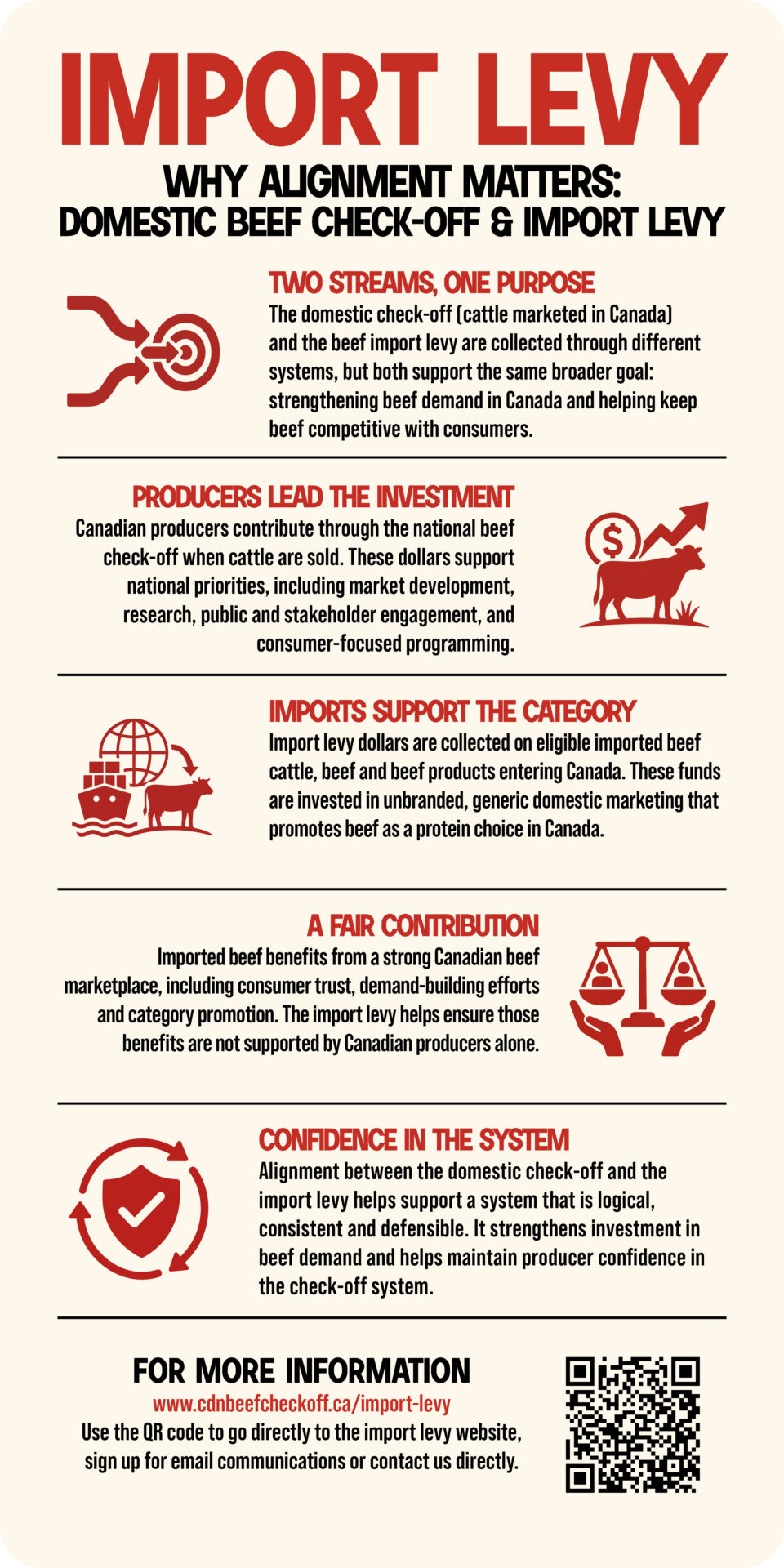
For producers, the value of alignment is not only about dollars collected. It is about maintaining a system that is logical, consistent and defensible. If Canadian producers are expected to invest in building demand, then imported beef entering the same market should also make a fair contribution to demand-building activity.
The domestic check-off and the import levy may be collected differently, and they may not be invested in exactly the same way, but they are connected by purpose. Both recognize that strong demand for beef benefits the sector as a whole.
It supports fairness between domestic and imported product, strengthens investment in the Canadian beef marketplace, and helps ensure that the work of building beef demand is shared more broadly by those participating in that market.
For Canadian producers, that consistency is an important part of maintaining confidence in the check-off system and ensuring that beef continues to have a strong voice with consumers.